Tait Mural 2025 - Life Layers
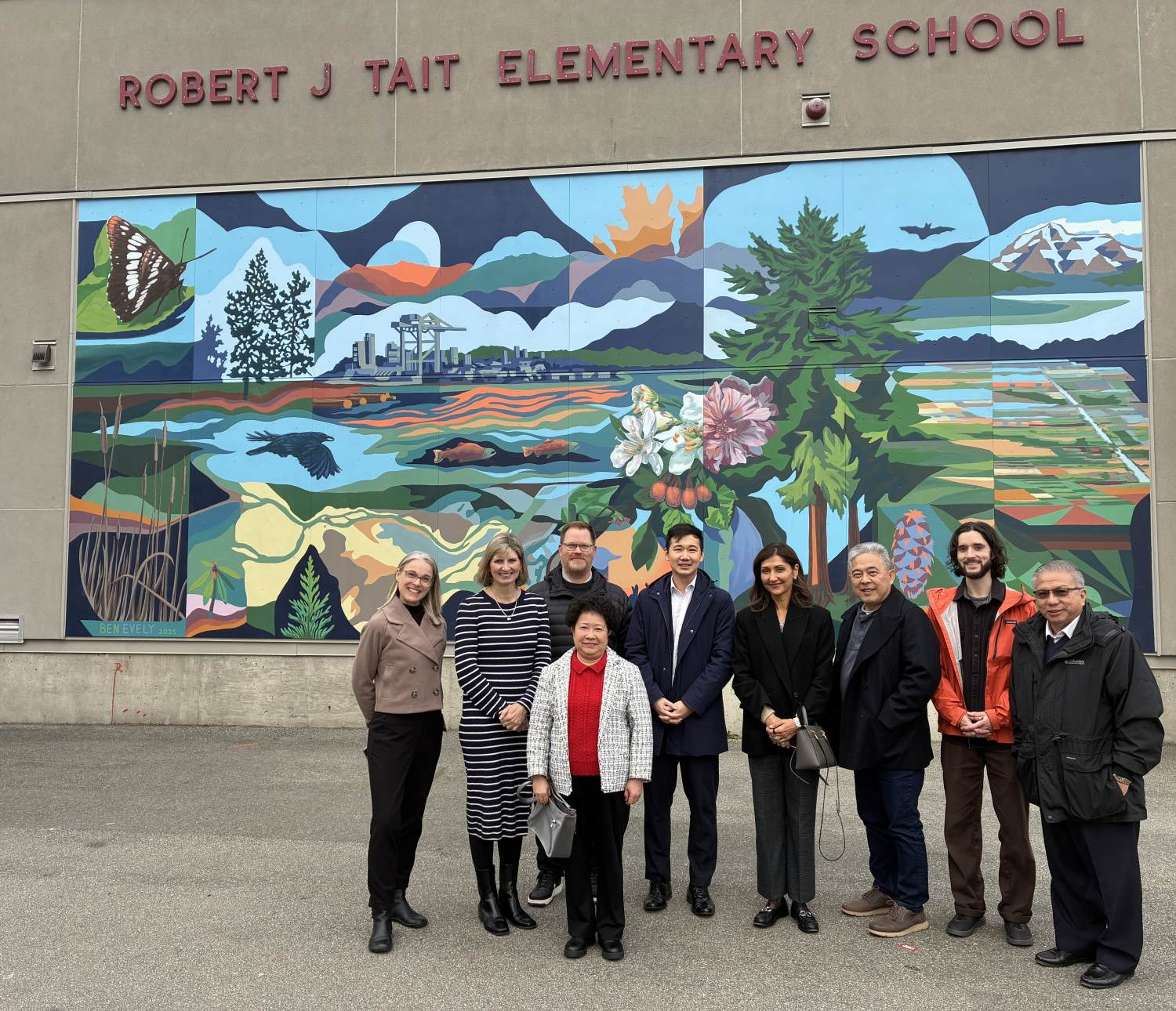
We are thrilled to unveil our new mural painted by Ben Evely during the summer of 2025. Here is a description of the mural and the inspiration behind the images, designs and colours.
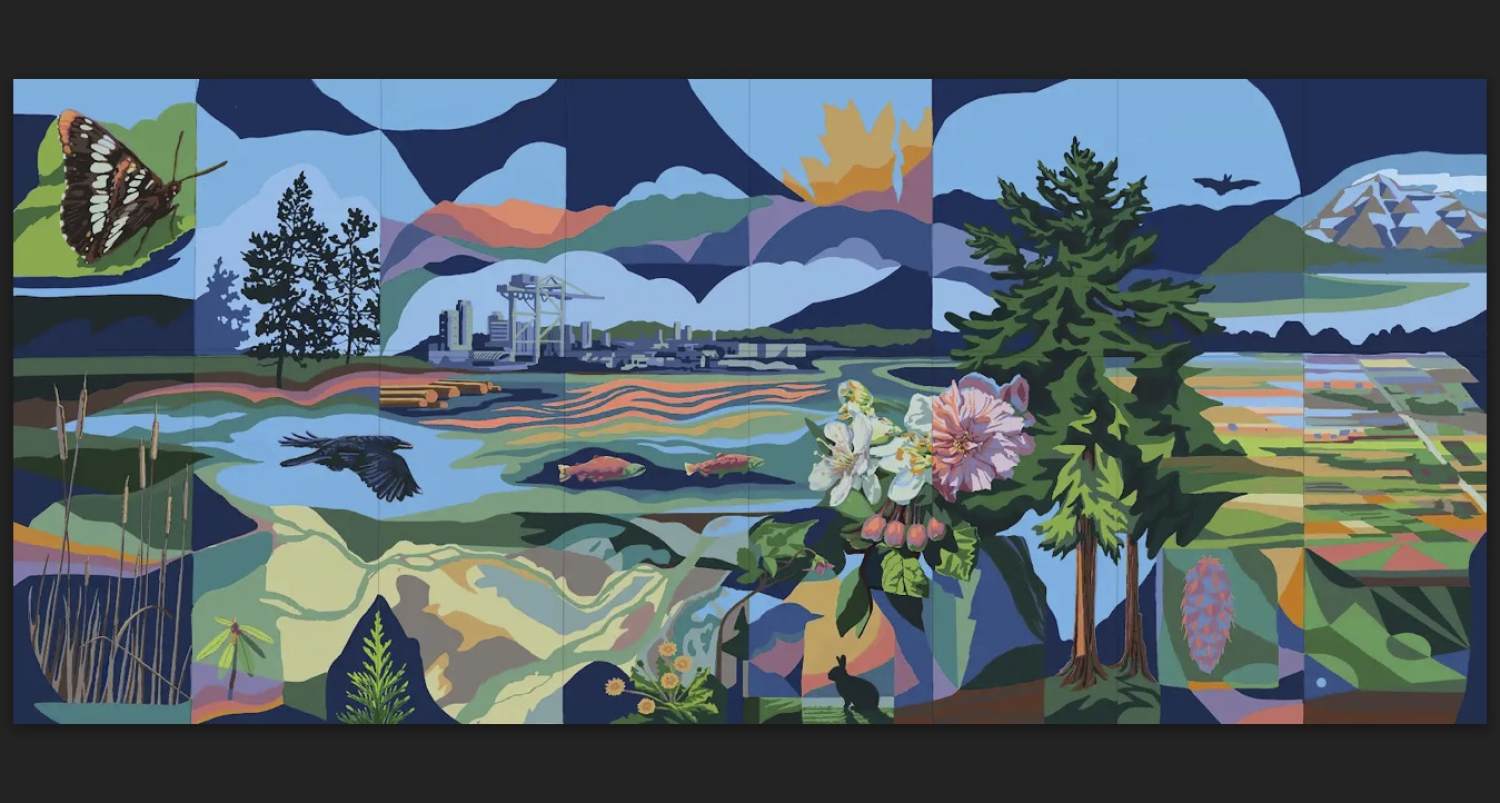
The mural showcases a spectrum of the natural world local to Richmond, and to the area around R.J Tait Elementary. The elements are based on the most frequently tallied responses from the students on engagement worksheets. The mural also focuses of native species integral to the local area. The result is largely representative of what came to mind for the students, while also including some local elements which may be less familiar, or a unique vantage point on a familiar sight.
The flow of the Fraser River is the central to the mural concept and connects the various elements in the composition. Mountains, trees, forests and the river were the most prominent outdoor themes which emerged from the student engagement. Students recalled hanging out at parks near the river, the cool breeze, the many plants and animals on the riverside, and North Shore mountains in the distance. In the lower left section of the mural, common cattails and labrador tea plants are pictured, both common sights in marshes and bogs. A detailed illustration of a western red cedar branch is also nearby.
The central middle section of the mural depicts a northwestern crow and sockeye salmon. The crow was the most frequently mentioned bird species in the feedback. Salmon were also mentioned and are of course integral to the Fraser River which harbours the largest population in the world. The striped water reflection pattern above the salmon is a nod to the school’s sports team mascot, with stripes in the water mimicking tiger fur. To the left of the stripes, some logs float, pointing to the industrial aspect of the local riverscape.
Forms based on a map of sediments of the Fraser River are pictured in the lower left section of the mural. The river’s flow can be traced up into the top right corner to Yuh-hai-has-kun or Mt. Robson, which is the starting point of the Fraser headwaters. A central aspect of the mural concept considers how we are all connected within expansive natural systems. To the left of the peak, a silhouette of Townsend’s big eared bat is pictured.
The central flowers are the Pacific crabapple and a cherry tree blossom. One of the most popular plants mentioned in the engagements were cherry blossom trees. Both plants can be found nearby the school. Just below and left of the flowers, is a salmonberry bloom, which is playfully mimicking the shape of a lamppost.
The top left corner depicts a Loquin’s admiral butterfly, and the shore pine. Many shore pines can be found nearby at the Richmond Nature Park.
The central urban section depicts the view looking across the river at Tait Riverfront Park. This park was another frequent theme that came up, and one of the locations we walked to during the engagement sessions. The silhouettes of the North Shore mountains are directly behind the buildings and echoed again in the abstract mountain and cloud shapes above. The top section also features a cropped silhouette of a big-leaf maple.
In the right/central area, tree shapes of the western red cedar, and Douglas fir are found. The cedar trunk is culturally modified, with its bark harvested. This is a nod to Indigenous cultures and their stewardship of the local environment since time immemorial. A Douglas fir cone is also featured nearby.
In the right-hand side of the mural, an aerial view of rural Richmond is pictured, with the grid of farmland playfully rendered in geometric patterns. In the bottom right this geometry morphs into forms inspired by a soccer field. Soccer was the most prevalent sport mentioned in the feedback.
The most frequently tallied responses related to specific species were bunnies and dandelions. Although the mural highlights native species, the overwhelming enthusiasm from students makes their inclusion feel fitting. This is a potential opportunity for conversation on how introduced species and native species interact. The bunny is outlined by the orange light of a streetlight, as they can be found hopping about suburban grasses in the evenings.
Image Gallery
Image
Image